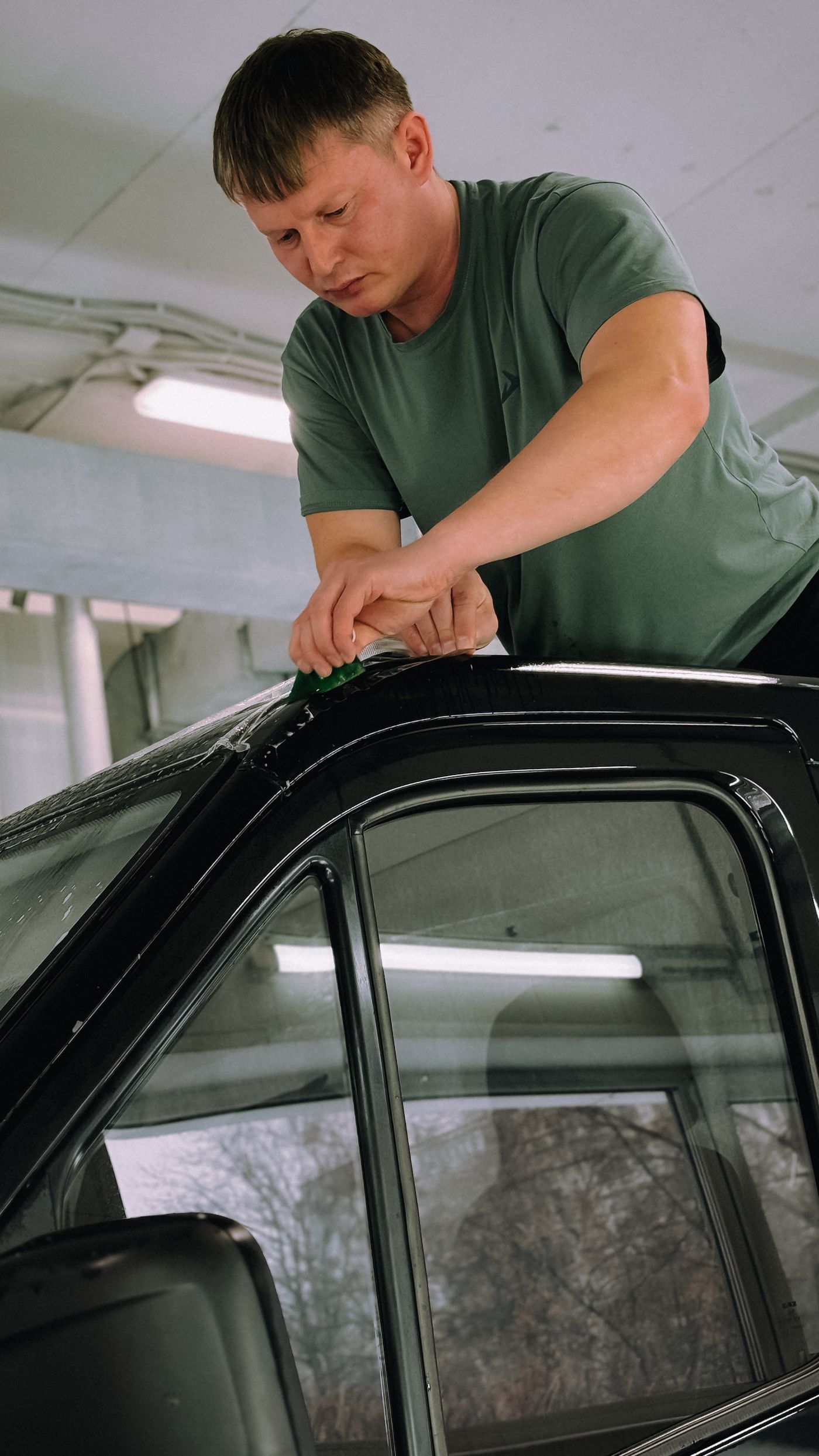
Enquiries for appropriate vehicle window film, rear privacy and compliant tint assessments.
01Identify rear side windows and rear screen, including existing factory tint. Identify the exact rear side windows and rear screen, including any factory tint or existing film. Ask whether the chosen film is compatible with the glass and intended use, rather than relying only on shade photographs.
Read guide →02Front windows and windscreens are subject to UK visibility requirements. Ask for a compliance assessment before work. Front glass must meet applicable visibility requirements. Request an appropriate assessment of the complete glass and film combination before agreeing work, and do not assume a labelled film percentage is a legal result.
Read guide →03Existing glazing affects total light transmission. A film shade alone is not the final measurement. Tell the installer whether the vehicle already has factory privacy glass. The final light transmission depends on existing glazing and the additional film; a suitable assessment should consider both together.
Read guide →04Consider visibility and desired appearance rather than relying on a marketing label. Compare appearance, visibility from inside the car and product information. Request a reference for the proposed film and ask how the installed appearance may vary with the vehicle's existing glass.
Read guide →05Ask for documented product performance and suitability for the glazing. Ask for documented performance figures for the proposed product and glazing combination. Heat performance can vary by film and installation, so compare specifications instead of relying solely on darkness.
Read guide →06Request manufacturer information and compatibility with the intended glass. Request documented UV performance and the exact film specification. Confirm compatibility with the relevant vehicle glass; no blanket health or performance claim should be inferred from appearance alone.
Read guide →07Heating elements and previous films need particular assessment during removal or installation. Identify heated elements, antennas and previous film, and explain any damage. Request an appropriate removal or installation assessment so vulnerable features are taken into account.
Read guide →08Describe bubbling, peeling or adhesive residue and the affected windows. Photograph peeling, bubbles or residue and identify whether removal alone or replacement is requested. Rear screen elements and existing damage can make removal a different task from installing a new film.
Read guide →09Consider the vehicle's operational visibility needs and fleet policies. Record driver visibility needs, operational policy and the windows requested. The responsible installer should confirm appropriate compliance before work is accepted; appearance must not override safe use.
Read guide →010Follow the installer and manufacturer's advice for curing and cleaning. Keep the product's written curing and cleaning instructions and the installation record. Avoid using an unapproved cleaning product or disturbing a newly fitted film before its specified curing period.
Read guide → Every quote depends on the vehicle, suitable provider and actual scope. No unverified qualification or outcome is claimed.